
Chairside 41
Why Would Replacing the Crown Alone Not Solve the Problem?
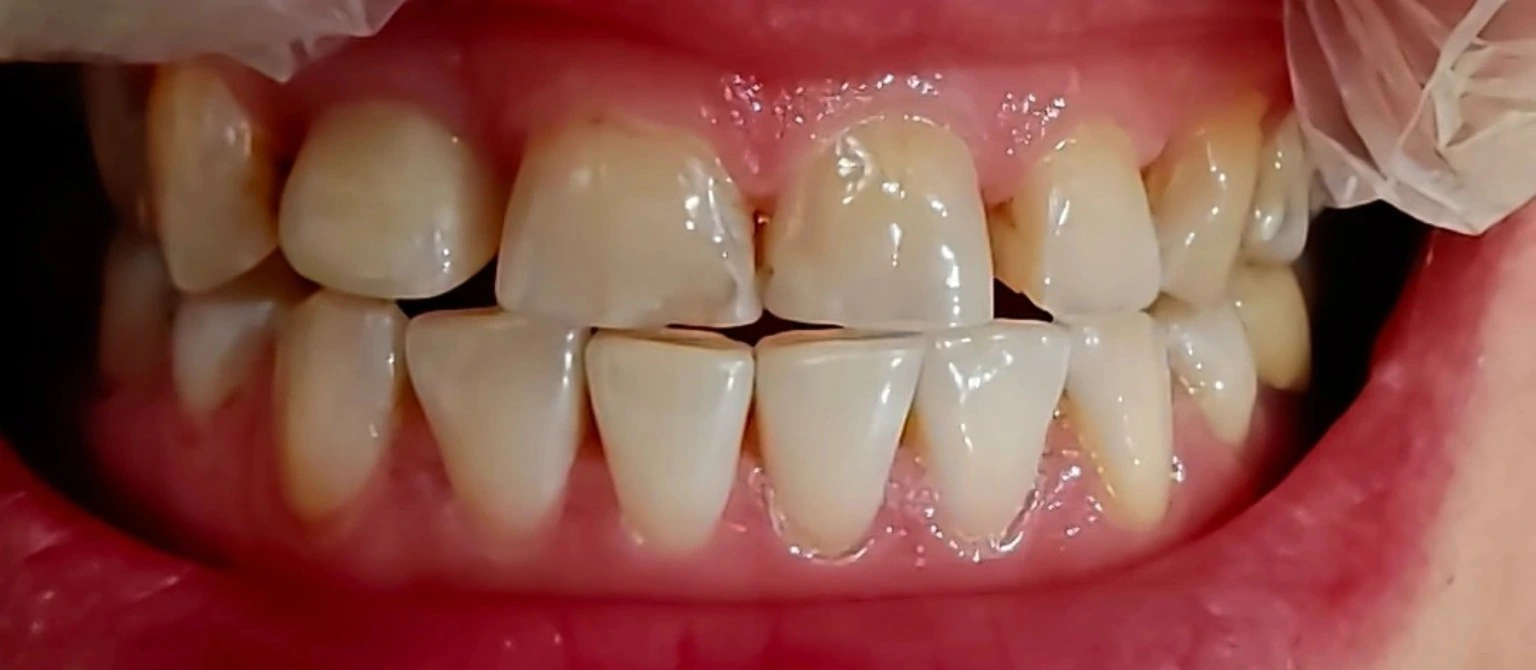
The patient came in for an assessment of the crown on the maxillary right lateral incisor, which had been made at another clinic. The main complaints were that the tooth was short and wide, with a gap on either side. The patient wanted me to remove the crown and make a new one to resolve these problems.
Before deciding whether to replace the crown, I wanted to assess the protrusive movement. I asked the patient to bring the mandible forward so I could examine both the path of movement and the final edge-to-edge position shown in the photograph. The aim was to determine how much room was available to lengthen the tooth under the existing conditions. This assessment showed that there was no space to increase the crown's length.
I explained to the patient that a new crown could improve its appearance, but replacing the crown alone would not meet the patient's expectations. Lengthening the tooth was not possible in the current situation; closing the gaps on either side by increasing the width of this crown would make it even wider and worsen one of the patient's main complaints.
Therefore, by restricting treatment to this one tooth, we could not achieve the changes the patient expected. The crown's appearance could be improved, but lengthening it and closing the gaps without making the tooth wider would require changes to other teeth.
Explanation for Dentists
To increase the length, where conditions are suitable, the possibility of creating space through enameloplasty of the opposing teeth can be assessed. To improve the proximal spaces, partial veneers on the adjacent teeth can also be considered, so that closing the gaps does not rely solely on increasing the width of the lateral incisor crown. In that situation, the treatment plan extends beyond replacing a single crown and includes the adjacent and opposing teeth.
The content of this page is intended for the educational use of dentists and dental students.