
Chairside 52
Before an implant on tooth 2, the status of teeth 3 and 5 has to be settled first
A patient came in to have the status of teeth 3, 5 and 6, which already had crowns, determined. After examination and radiographs, it was decided to remove the caries first, to find out how much sound structure remained and whether crown lengthening (CL) surgery was possible. After the caries was removed, the patient was sent with a referral letter for a CL consultation.
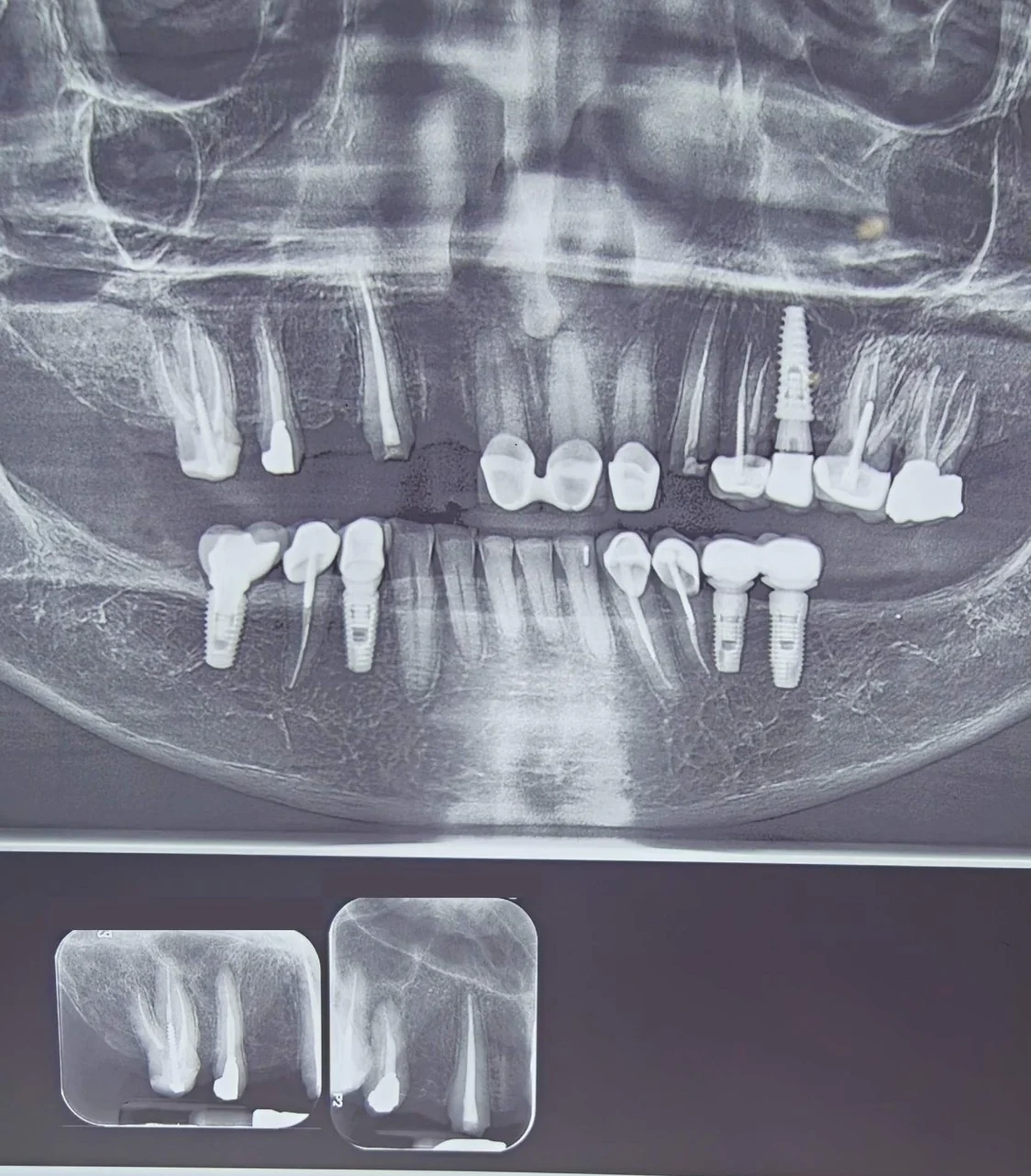
While talking with the patient, it became clear that they had booked an implant appointment for tooth 2 at another clinic. The point is that in the usual treatment plans for this area, tooth 2 happens to be the one position that does not need an implant. If teeth 3 and 5 can be retained, tooth 2 is placed as a cantilever on the bridge. If teeth 3 and 5 are replaced with implants, tooth 2 is again replaced as a cantilever on the implant bridge.
The only situation in which an implant in the area of tooth 2 might be considered is when tooth 5 can be retained but tooth 3 has to be extracted. Even then, an implant in the area of tooth 2 is not my first choice. This space, that is teeth 2, 3 and 4, needs two implants, and I prefer to place them at positions 3 and 4, in which case tooth 2 is again placed as a cantilever on the implant bridge.
For this reason, until the status of teeth 3 and 5 is clear, deciding about an implant in the area of tooth 2 is premature and disrupts the logical order of the treatment plan.
This page is intended for educational use by dentists and dental students.