
Insight 103 — Correcting Short Restorations with Bite Registration and Digital Scanning
Sometimes, after trying in a restoration, we find that although it is fully seated on the tooth, it does not have enough occlusal contact. In other words, the restoration is occlusally short and cannot contribute to chewing as we would expect.
One problem in this situation is that the laboratory does not know exactly where, or by how much, the restoration needs additional height.
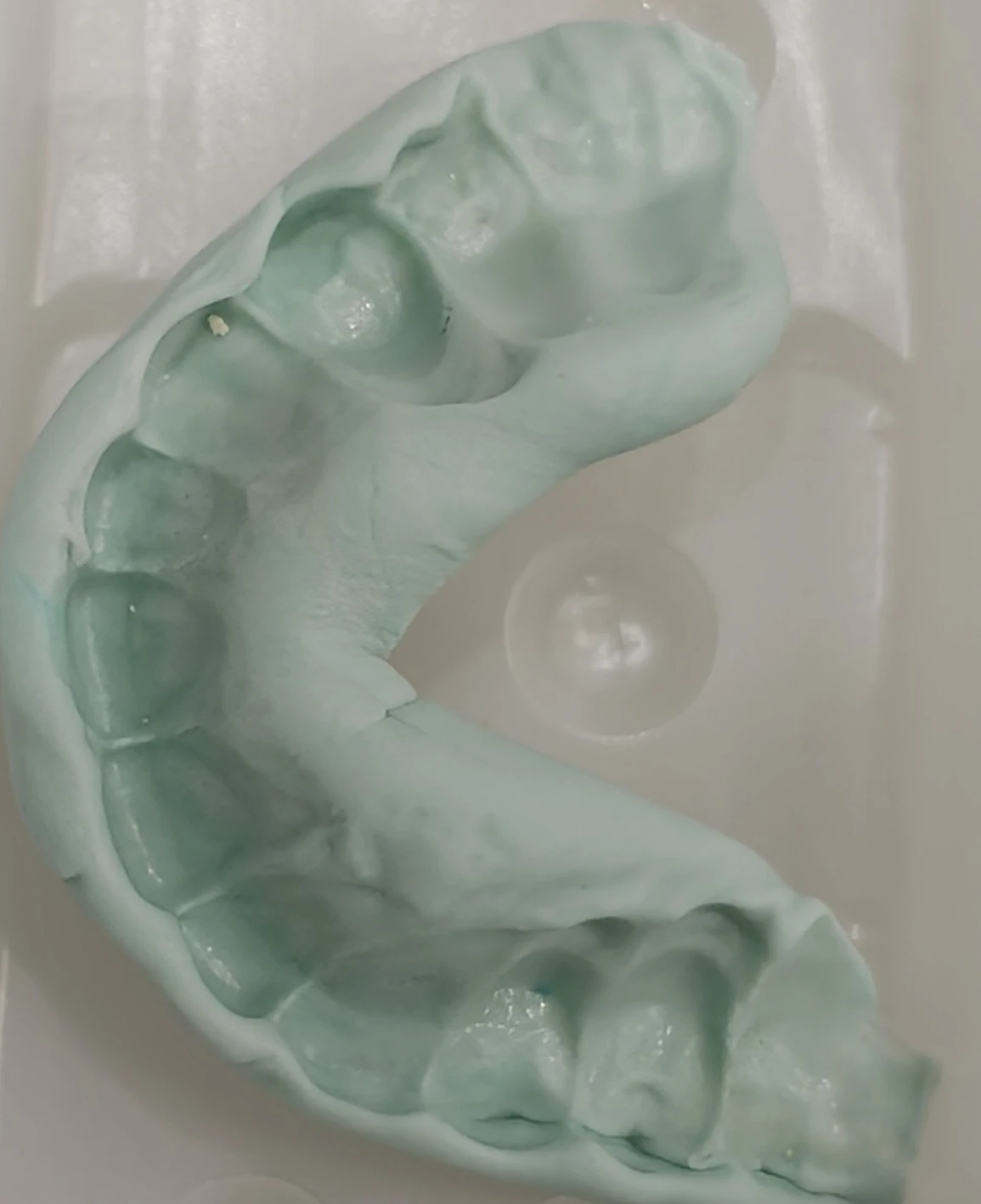
I used to use a bite registration to address this problem.
I would place the restoration in the mouth and, after confirming that it was fully seated, record a bite in the patient's maximum intercuspation (MIP).
I would then send the restoration and the bite registration together to the laboratory. By examining the thickness of the bite material in the area of the restoration, the technician could estimate the location and approximate amount of the occlusal height deficiency and, when possible, correct it by adding porcelain.
The same approach in digital dentistry
Today, I sometimes use the same logic, but instead of recording the bite with material, I use an intraoral scan.
With the crown fully seated in the mouth, I capture the arch containing the restoration, the opposing arch, and the occlusal relationship between the two arches.
This allows the laboratory to examine the files and identify the location and approximate amount of the occlusal clearance, so the restoration can be adjusted more purposefully.
A few clinical points
The accuracy of this method depends on the restoration being fully seated and on recording the jaw relationship accurately and reproducibly.
In addition, whether the restoration can be corrected depends on its material and structure, as well as the amount of correction required. For example, adding porcelain to a layered restoration is not the same as modifying a monolithic zirconia restoration, and sometimes remaking the restoration is the more appropriate choice.
The key point is that when a restoration is occlusally short, instead of simply asking the laboratory to increase its height, we can provide information about the location and amount of the missing contact.
This can help reduce guesswork during occlusal adjustment.
This page is intended for educational use by dentists and dental students.