
Insight 104 — Short Crown or Premature Contact?
In one patient, I tried in an implant crown on the mandibular left molar. The opposing tooth also had an implant crown.
After confirming complete seating, I noticed that the buccal cusps were separated from the opposing tooth by an estimated few tenths of a millimeter, with no occlusal contact.
At first, the crown appeared slightly short. I decided to take a putty bite registration so I could show the gap to the laboratory and have the crown adjusted.
But the putty registration revealed something else.
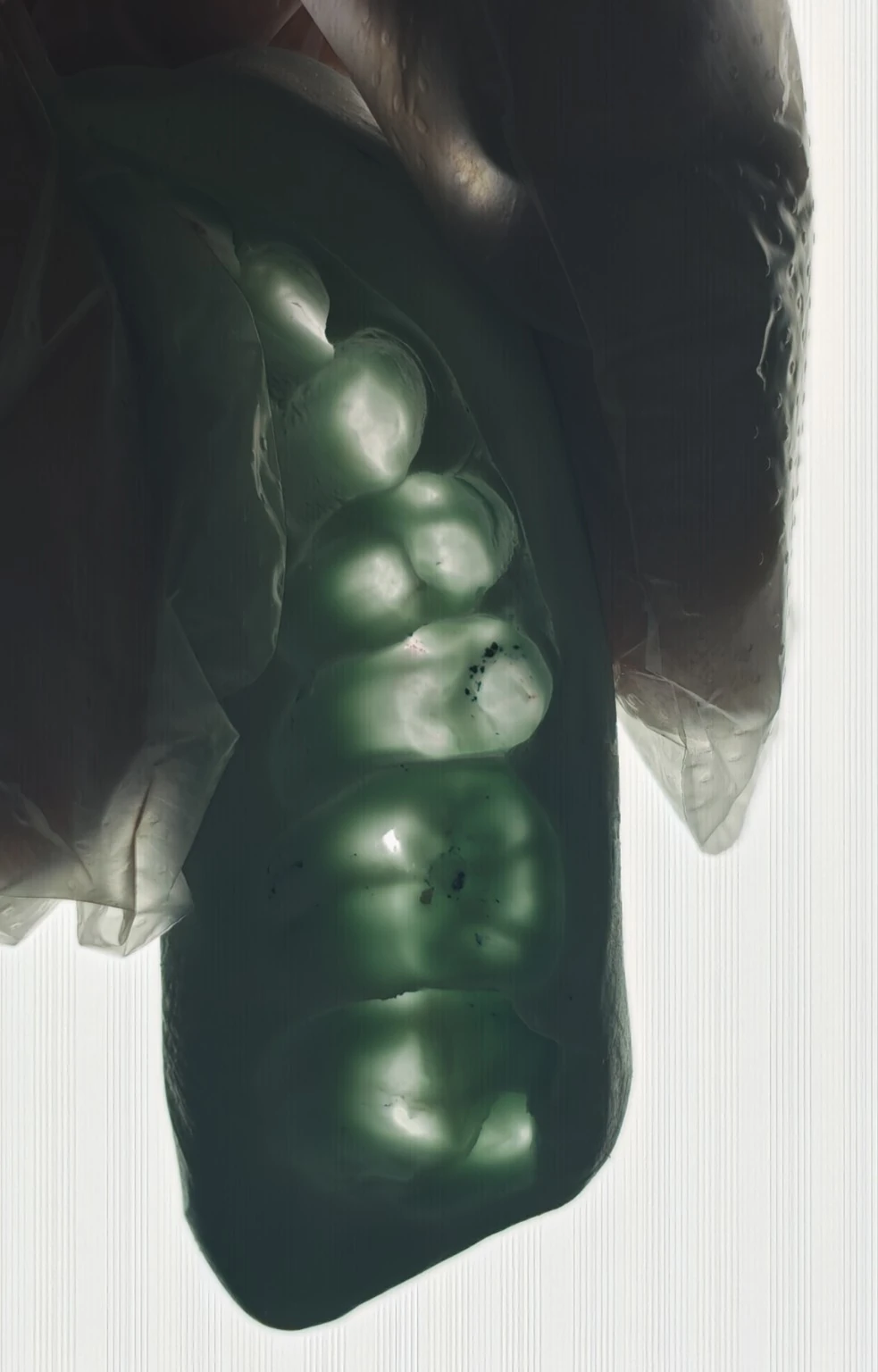
There was a substantially heavier contact around one of the lingual cusps than at the other sites. This raised the possibility that a premature contact was preventing the mandible from closing fully in the intended position, leaving the buccal cusps out of contact.
The discrepancy was subtle enough that I had not noticed it on the initial examination. Because both teeth were implant-supported, reduced sensitivity to subtle contacts may also have made the interference less noticeable to the patient.
I made a limited adjustment to the heavy contact and reassessed the occlusion.
The buccal cusps then made contact, without adding porcelain or returning the crown to the laboratory to increase its height.
Clinical insight
When a crown is fully seated but lacks contact in part of the occlusal surface, it is not necessarily too short.
Sometimes a premature contact elsewhere prevents the mandible from reaching its final closing position and creates an appearance similar to a short crown.
A putty bite registration can show an occlusal gap and may also provide clues about uneven contacts; however, these findings should be confirmed clinically.
Before deciding to add to the crown height, it is worth checking whether a premature contact elsewhere explains the gap.
This page is intended for educational use by dentists and dental students.