
Insight 99 — Less Tooth Reduction Does Not Always Mean Better Treatment!
Structural Durability in Tooth Preparation
One important principle of tooth preparation for indirect restorations is structural durability of the restoration.
We sometimes assume that removing less tooth structure makes treatment more conservative and therefore better. However, this is not always true.
The aim of tooth preparation is not simply to preserve as much tooth structure as possible; it is to preserve as much sound tissue as possible while providing enough space for a durable restoration.
Each restorative material requires a specific minimum thickness according to its composition, mechanical properties, restoration type, and conditions of use. If reduction is insufficient, the restoration may be too thin in some areas, increasing its risk of fracture.
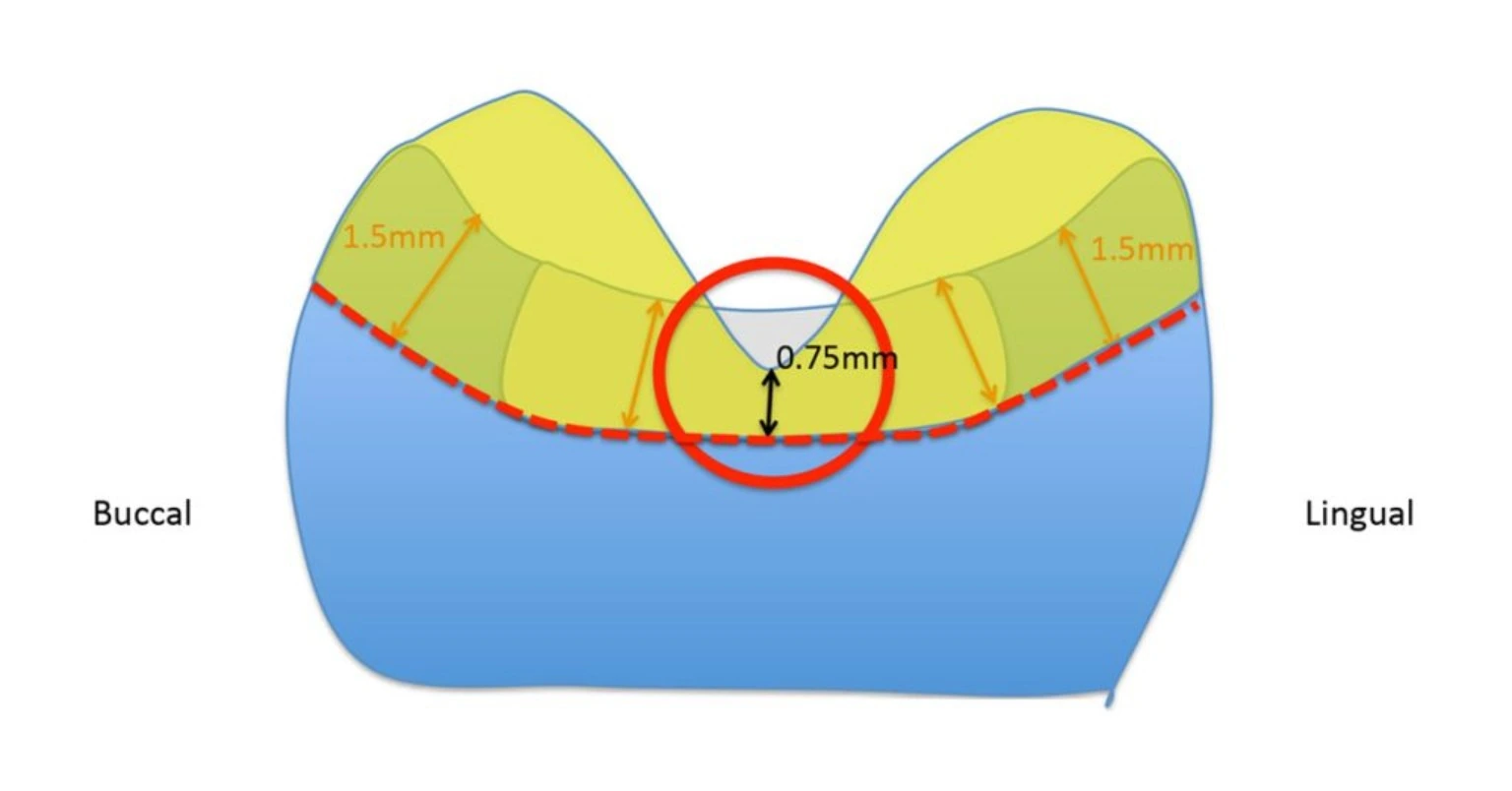
On the other hand, attempting to compensate for insufficient reduction by increasing the external thickness of the restoration can lead to overcontouring, disruption of natural anatomy, and occlusal or periodontal problems.
For example, when preparing a tooth for a crown, the total amount of tissue removed is not the only consideration. Appropriate distribution of the space created, following occlusal anatomy, providing enough space in load-bearing areas, and eliminating sharp angles also influence the restoration's durability.
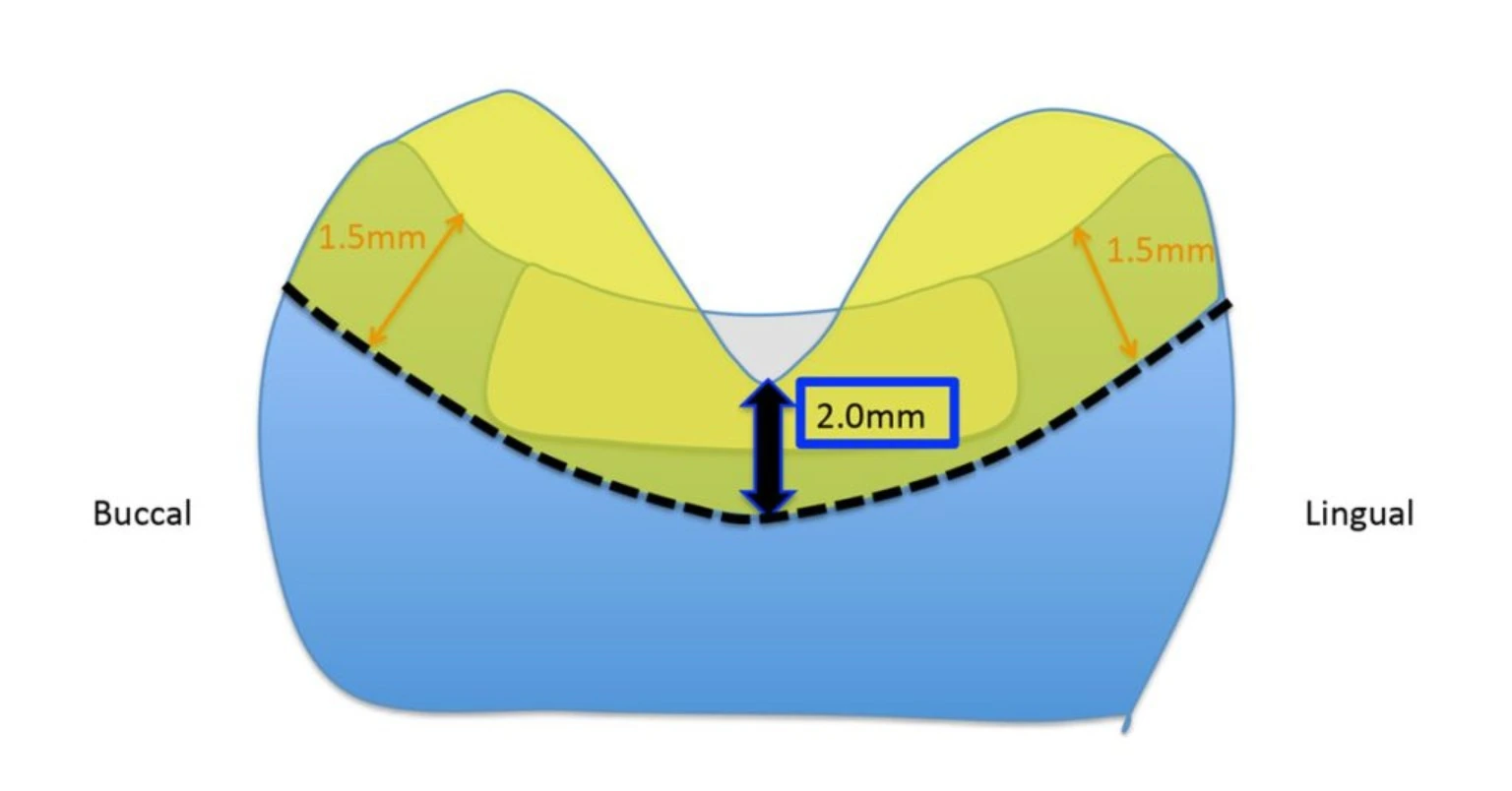
This does not mean that more reduction provides greater certainty. Excessive reduction can also weaken the remaining tooth structure and increase the risk of pulpal injury or loss of retention and resistance.
The ideal preparation therefore involves neither the least possible reduction nor the greatest acceptable reduction, but the minimum reduction that meets all mechanical, biological, and functional requirements of the selected restoration.
An important point is that preparation requirements cannot be expressed as one fixed number for every restoration. The material, restoration design, cementation method, and the patient's occlusal conditions determine how much space is actually required.
Conservative preparation means avoiding unnecessary tissue removal, rather than preserving tissue that prevents fabrication of a properly designed, durable restoration.
This page is intended for educational use by dentists and dental students.