
Changing the OVD: When Is It Needed and How Far Can We Go? (Part 1)
Imagine a patient who comes in with severe wear of the anterior teeth, and the teeth have become short. The first thing that comes to mind is that the OVD has been lost and we have to restore it. But has the vertical height really been lost? And if we are going to open it, how far can we go?
Has the OVD really decreased?
Anterior wear on its own does not mean a reduction in OVD. When a tooth wears, compensatory dentoalveolar eruption makes up for part or all of that height, and the problem is that the amount of this compensation cannot be measured in the clinic. What we should look at are the posterior teeth, because they maintain the OVD. If the posterior teeth are in place and show little wear, it is unlikely that the OVD has decreased. We see a real reduction mostly in posterior bite collapse and in denture patients.
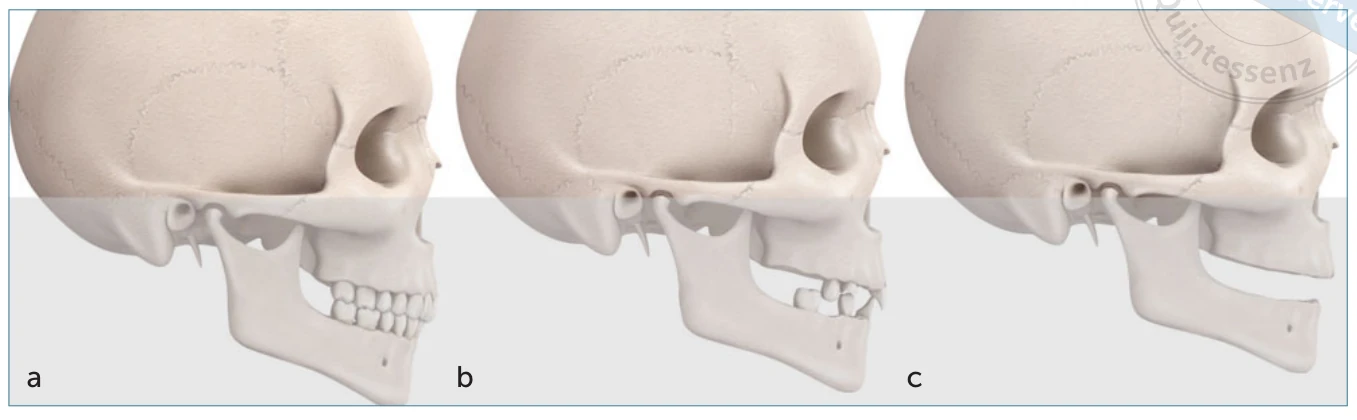
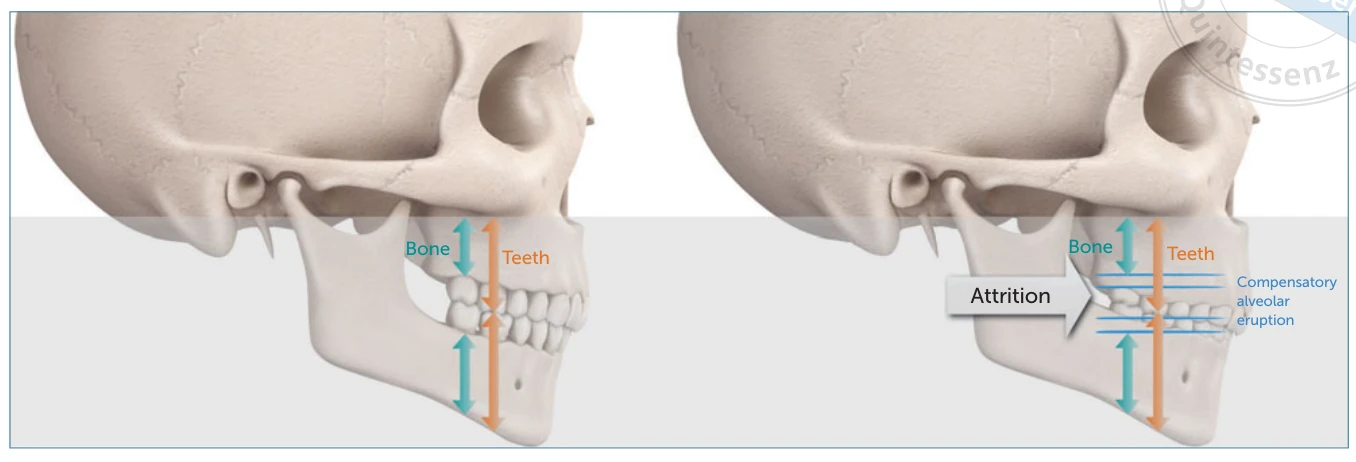
The more important point is that the OVD is not a fixed number but a range that the patient tolerates physiologically. The methods for determining it, namely facial proportions, rest position, phonetics and cephalometrics, are none of them reliable on their own and should be used together. This is why Calamita et al. (2019) say that diagnosing a reduction in OVD is a secondary issue and that we are not supposed to search for the patient's previous OVD. The right question is what OVD this treatment needs for esthetics, biomechanics and function.
So when should we change the OVD?
There are three main reasons. The first is esthetics: the longer we make the incisal edge, the more OVD increase is needed so that the teeth do not interfere with the envelope of function. But we should not expect that opening the OVD by itself will usually make a noticeable change in the patient's face, from the dentist's perspective. According to the study by Gross et al. (2002), cited in this same article, dentists did not detect changes of up to 6 mm in the face.
The second reason is space. Increasing the OVD creates room for the restorative material and allows the treatment to be additive and minimally invasive. According to the authors, there is no longer any reason for extensive endodontics and posts for the sake of retention.
The third reason is improving the incisal and occlusal relationships, because in the new position the overbite, overjet, functional pathways and the direction of forces are arranged anew. Decreasing the OVD also has indications, but they are limited, such as vertical maxillary excess and anterior open bite.
Isn't it risky?
The systematic review by Abduo (2012), cited by the article, concluded that a permanent increase of up to 5 mm, when indicated, is safe and predictable and that its symptoms usually resolve on their own within about two weeks. Moreno-Hay and Okeson (2015) also found no evidence that a permanent change in OVD causes persistent TMD symptoms.
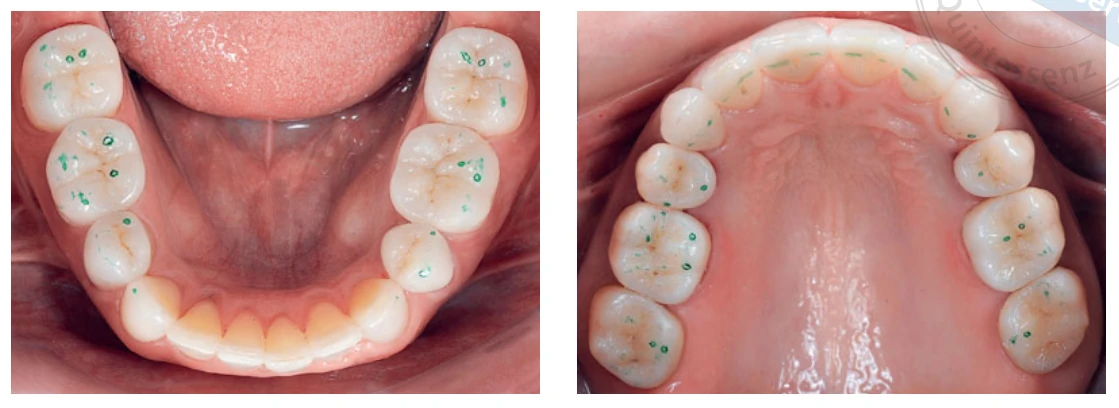
This safety comes with conditions. The TMJ must be healthy, adapted and stable, the contacts must be bilateral and simultaneous, the teeth must receive axial forces, and the position of the anterior teeth must not disturb phonetics or the closing path of the jaw.
Where is the main limitation?
In an edentulous patient the teeth can be arranged freely in three dimensions, but in a dentate patient any amount of OVD opening changes the relationship of the anterior teeth, and this is what limits the amount of change. The rule the article cites from Rebibo et al. (2009) is 1:2:3: on average, and depending on the facial type, every 1 mm of increase in the second molar region reduces the overbite by about 2 mm, increases the overjet by about 1.3 mm and opens the incisal pin by 3 mm.
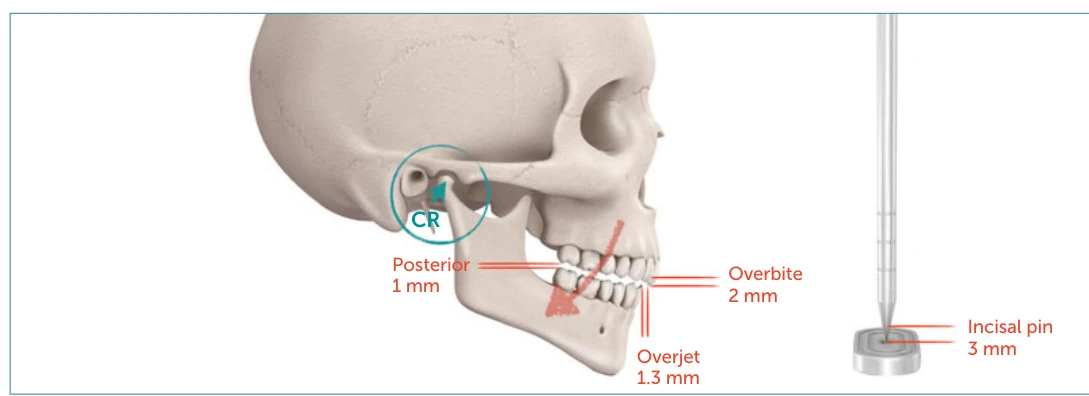
Its practical result depends on the Angle class. In Class I, if we open the pin by 6 mm, the lingual surface of the anterior teeth must become about 4 mm thicker to keep the anterior contact, and this means possible problems with comfort, phonetics and esthetics. In Class II the situation is harder, because the overjet increases and creating a stable anterior contact is almost impossible. In Class III, on the contrary, opening the OVD benefits the patient and helps correct the anterior crossbite.
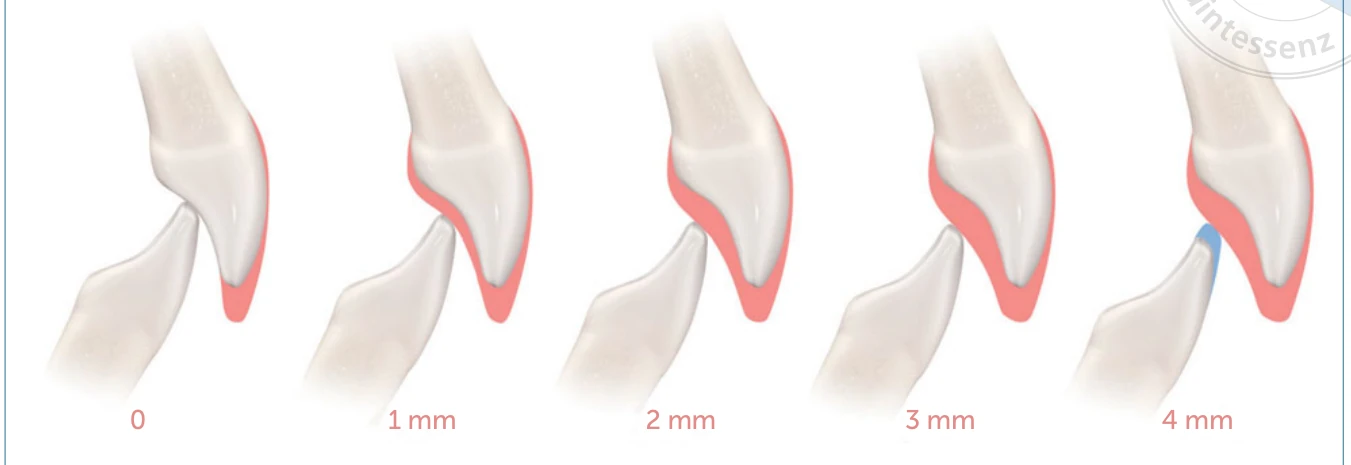
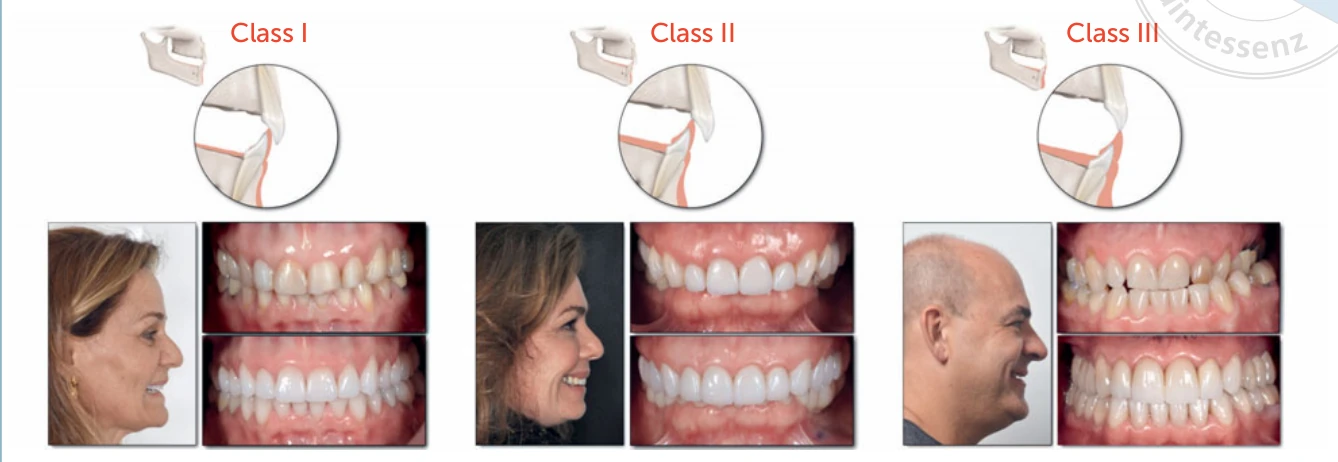
So when the main problem is the relationship of the jaws or the position of the teeth, this discrepancy can be partly compensated with restorations and OVD opening, but the authors consider this the last option. The reason is that compensating for problems with restorations always costs something somewhere, like that thick lingual in Class I that may disturb comfort and phonetics. That is why, wherever it is indicated, orthodontics or orthognathic surgery should be proposed first.
Final word
Before touching the OVD we must have a clear clinical reason, and the change should be the minimum amount that provides esthetics, restorative space and occlusal relationships. The smaller the change, the less adaptation the system needs. The order of carrying out the work in the clinic is the subject of part two.