
Chairside 25
Sometimes Not Accepting the Patient Is Better
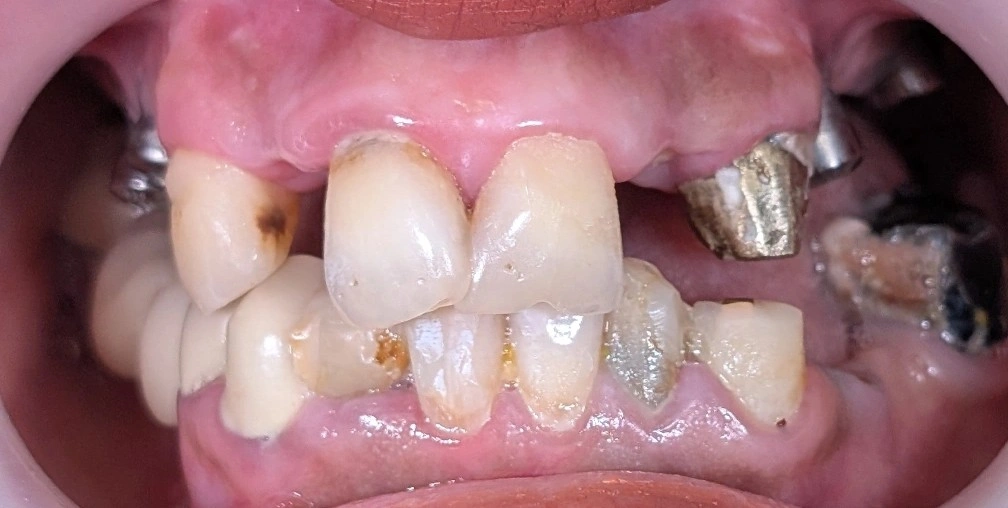
Presenting Complaint. The patient presented with a chief complaint of a severe gag reflex and the inability to take a conventional impression, seeking treatment for a posterior implant prosthesis. According to the patient, it had already been arranged that the esthetic treatment and the anterior crowns would be handled by another colleague, and that I would be responsible only for rebuilding the posterior stops.
Sometimes Not Accepting the Patient Is Better. After the clinical evaluation, the treatment plan was declined and the patient was not accepted, for the following reasons:
- Anatomic status and poor hygiene. The patient's oral hygiene control was assessed as inadequate. The posterior implants show a buccal inclination, and the keratinized gingiva around them is also limited. Combined with the poor hygiene, these factors sharply raise the future risk of bone and soft-tissue loss.
- Inconsistency in shared treatment and the division of responsibility. Based on an assessment of the core quality on the upper-left canine (tooth #3), the competence of the colleague treating the anterior segment was in question. Since anterior and posterior prosthetic treatment are highly interdependent, a lack of coordination between the two providers would raise the risk of occlusal interference — and if the treatment failed, would unfairly place the blame on the posterior prosthesis.
- The patient's attitude toward treatment. An assessment of the patient's behavior showed that they were not looking for quality, standard-of-care treatment, but were simply seeking to optimize the treatment path — shortening and easing the process to their own advantage. Combined with the poor hygiene, this doubles the risk of future complications and non-cooperation.
️Conclusion and Clinical Tip: because there was no acceptable prognosis and the clinical and interpersonal risks were high, the patient's treatment was not accepted. When a treatment plan is split between two uncoordinated providers and the responsibility for a possible failure would unfairly fall on one side, discontinuing that treatment — even when the patient is present and asking for it — is the more professional decision.
The content of this page is intended for the educational use of dentists and dental students.