
Chairside 39
When What the Patient Wants Does Not Fit the Solution They Have in Mind
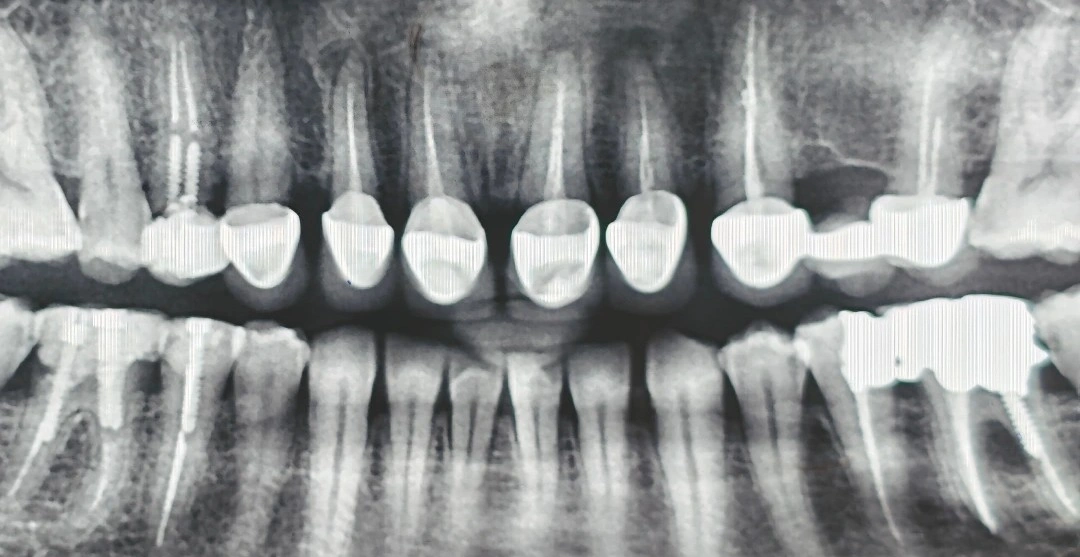
The patient came in for a visit today. Earlier, because of the gaps between their teeth and with an esthetic complaint, they had gone to someone who was not a dentist, and that person crowned ten of their teeth. On examination and on the radiograph it is quite clear that the crowns are of poor quality, and that the root canal treatments of the teeth almost all have problems too.
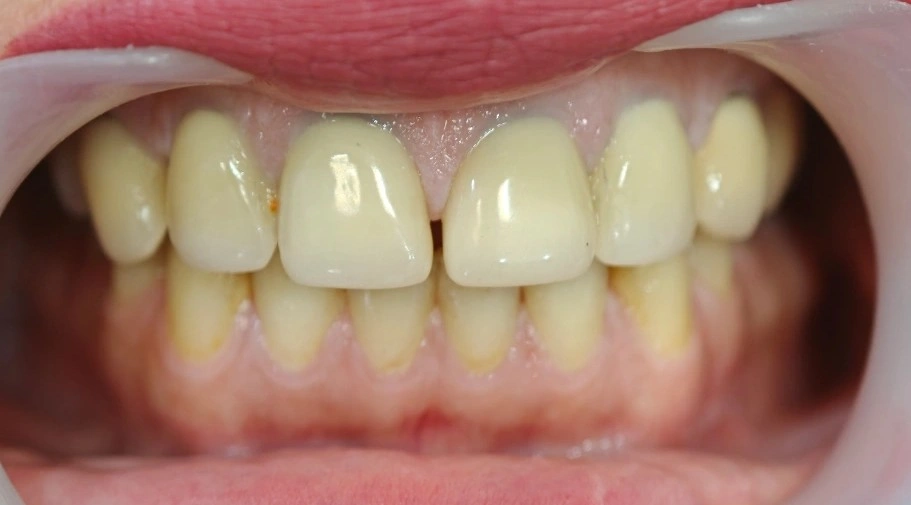
The interesting point is that what bothers the patient is neither the quality of the crowns nor the state of the root canal treatments. Their chief complaint is two things: there are still gaps between their teeth, and the crowns look too big to them. So they want the crowns replaced so that the gaps close and the teeth also become smaller.
These two wishes cannot be satisfied together just by replacing the crowns. If we make the crowns smaller, the gaps get bigger, and if we try to close the gaps with the crowns, the crowns come out big again. The only way that answers both wishes at once is for the teeth themselves to move, which means the treatment has to go toward orthodontics. But the state of the roots and the overall condition of the mouth do not allow us to go straight to orthodontics; before that, the necessary treatments, such as root canal retreatment and crown replacement, have to be done.
The treatment sequence I planned for this patient:
- Orthodontic consultation: Before anything else, the patient gets an orthodontic consultation so that we are sure the work really will end in orthodontics. That is, when the patient is referred to the orthodontist under the conditions we consider appropriate, they will accept the treatment and have no particular reason to turn it down.
- Removing the crowns and root canal retreatment: After the orthodontist's confirmation, the crowns are removed and the root canal treatments are redone.
- Post and core: After the root canal treatment, posts and cores are made for the teeth.
- Crowns before orthodontics: At this stage provisional crowns — or, if the patient or the orthodontist prefer, definitive crowns that brackets can be bonded to — are made and delivered with appropriate dimensions approved by the patient. Because the dimensions of the crowns are corrected, the gaps between the teeth may become even larger after this stage.
- Orthodontics: Now it is the orthodontist's turn to close these spaces.
- Final crowns: Once the spaces are closed, the crowns are replaced and the final crowns are made with the same dimensions we had previously approved with the patient.
The content of this page is intended for the educational use of dentists and dental students.