
Insight 67 — Why Don't We Need 360-Degree Cord Packing on Teeth with Amalgam Restorations?
Published:
Last reviewed:
فارسی
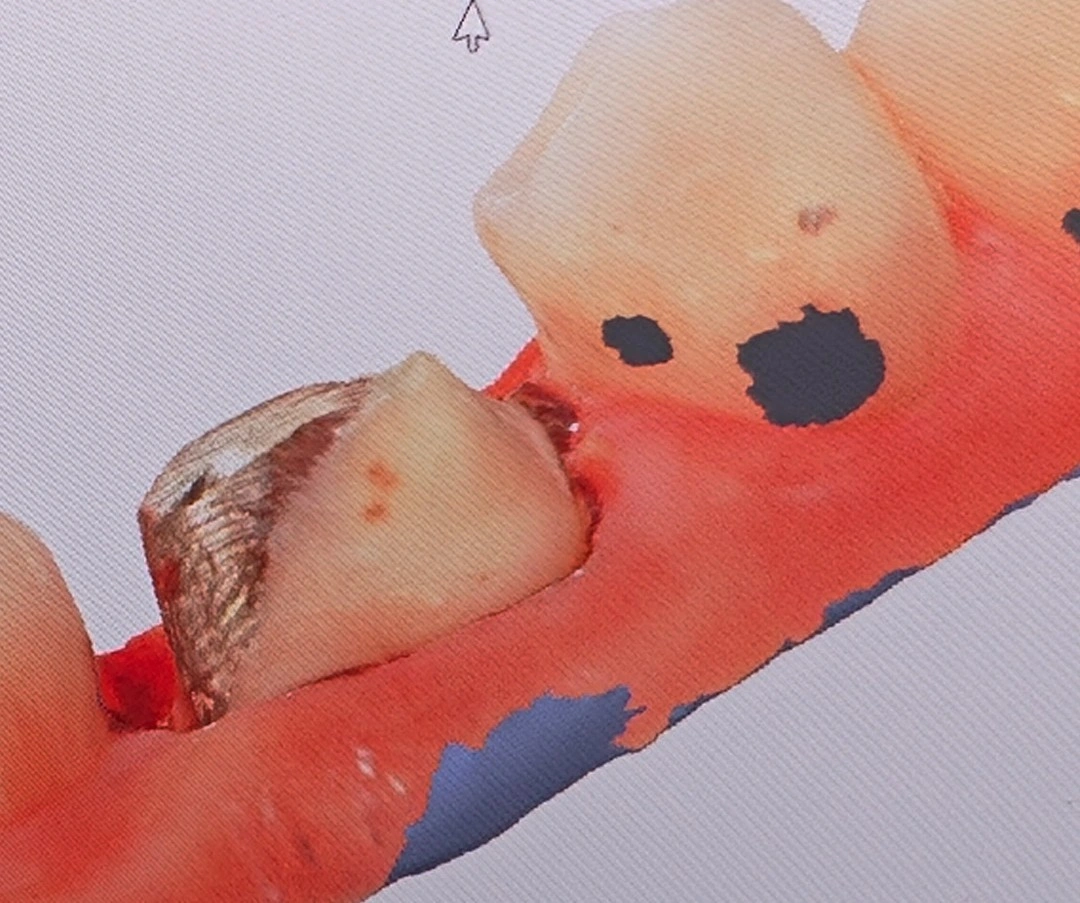
Clinical Explanation
Why don't we need 360-degree cord packing on teeth with amalgam restorations?
In digital impression we sometimes see a tooth whose three walls are natural tissue and whose fourth wall is amalgam next to the gingiva. The question is whether we do cord packing on the amalgam side the same as the others, or skip it and leave the boundary to a vertical finish line.
-
Clinical situation
In prosthodontics and digital impression, we sometimes face teeth whose three walls are natural tooth tissue and whose fourth wall is amalgam. Clinical experience has shown that in such cases, placing cord 360 degrees is not reasonable, and it is better to skip the amalgam area. -
Why cord packing on the amalgam side is a problem
Using cord on the side where the amalgam wall sits next to the gingiva usually creates two serious challenges:
Bleeding and gingival injury: in this area we do not have an adequate sulcus depth; packing the cord subgingivally therefore irritates the tissue and causes bleeding.
Cord displacement and a spoiled scan: because there is not enough depth, the cord has no stability, is displaced upward, and during the digital scan it lands exactly on the amalgam area and obstructs the view. -
The alternative: relying on a vertical finish line
In this technique, because we do not have a horizontal finish line that we would expose by packing cord to make the margins clearer, the approach is different.
In this situation we design on a vertical finish line. We have already become familiar with this type of finish line and its similarity to the topic of BOPT. The laboratory can readily choose an area above the gingival sulcus as the final boundary, and there is then no need to take the risk of using 360-degree cord.
The content of this page is intended for the educational use of dentists and dental students.